Plagiarism is not just about copying someone else’s work—it’s a serious academic and ethical offense that can severely damage your reputation as a student, researcher, or professional writer. In academia, maintaining originality is the cornerstone of intellectual honesty. Let’s explore what plagiarism really means, why it matters, and how you can avoid it.
What is Plagiarism?
Plagiarism occurs when a person uses another’s words, ideas, or data without giving them proper credit. It can take several forms, including:
- Copying text or ideas directly from a source without acknowledgment.
- Self-plagiarism, which happens when you reuse your own previous work without proper citation.
- Close paraphrasing, where the rewritten content remains too similar to the original structure or wording.
Why is Originality Important?
Originality lies at the heart of every credible and impactful research work. It:
- Reflects your critical thinking and ability to generate independent ideas.
- Adds unique contributions to your academic field.
- Builds trust and credibility with readers, peers, and evaluators.
When your work is original, it speaks to your integrity and respect for intellectual property—a quality that defines a true scholar.
How to Avoid Plagiarism
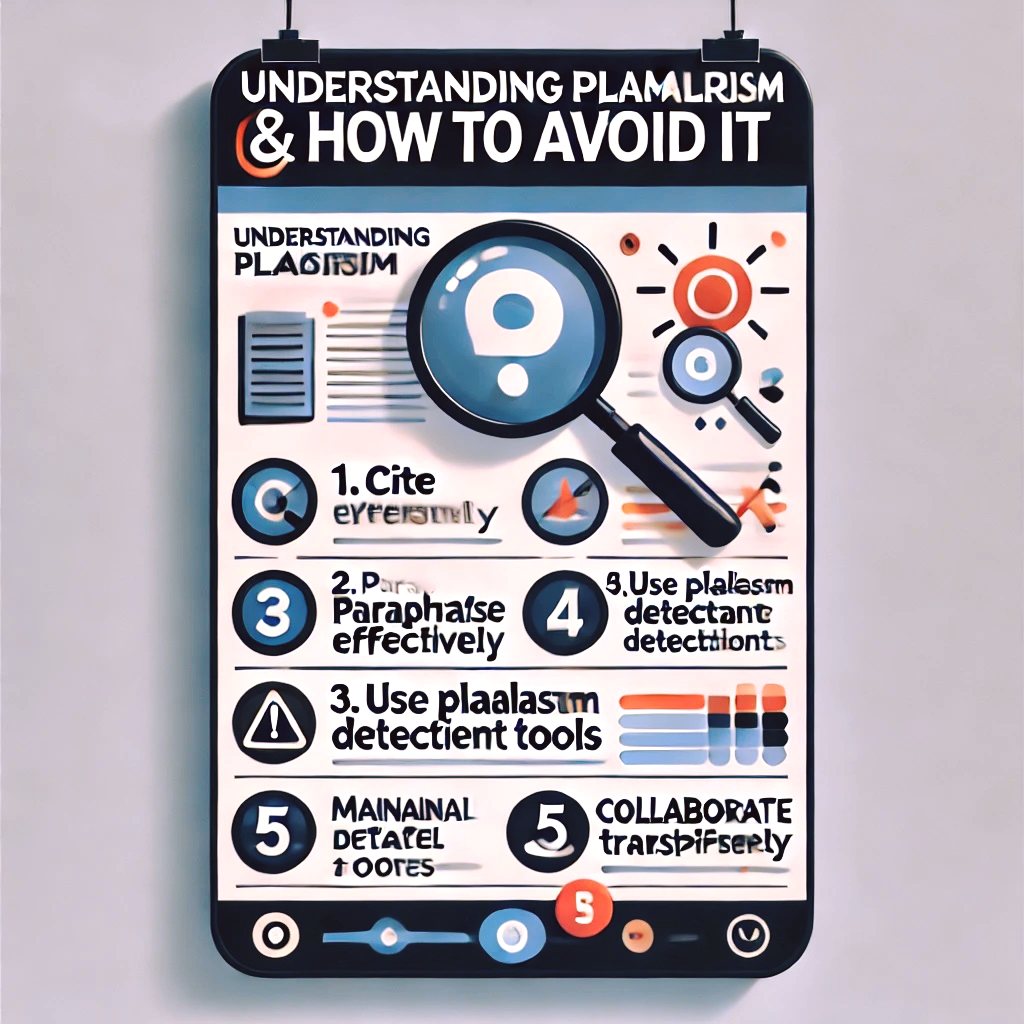
1. Cite Your Sources
Always acknowledge the original authors. Whether you quote directly or paraphrase, ensure that every borrowed idea is properly cited using recognized citation styles such as APA, MLA, or Chicago.
2. Paraphrase Effectively
Don’t just replace a few words—read, comprehend, and then rewrite the information in your own unique way. Proper paraphrasing demonstrates understanding and avoids unintentional plagiarism.
3. Use Plagiarism Detection Tools
Before submission, check your work through reliable tools like:
- Turnitin
- Grammarly Plagiarism Checker
- Quetext
These platforms help identify overlapping content and ensure your paper maintains a high level of originality.
4. Maintain Detailed Notes
During the research process, keep a clear record of every source, quotation, and reference. Organized notes reduce confusion and prevent accidental plagiarism.
5. Collaborate Transparently
If you are co-authoring or working on a group project, divide tasks clearly and give credit to the right contributors. Transparency ensures ethical collaboration and academic honesty.
How We Can Help
At PAK Ink Publications, we help researchers, students, and writers maintain the highest standards of originality and academic integrity. Our services include:
- Providing detailed similarity reports to detect plagiarism.
- Offering expert proofreading and editing for clarity and originality.
- Guiding you on proper citation and referencing techniques to meet academic standards.
If you want your work to be polished, professional, and plagiarism-free — we’re here to help.
📩 Contact us: pakinkpub@gmail.com
🌐 Facebook: @pakinkpub
📸 Instagram: @pakinkpub