Writing a PhD thesis is one of the most demanding yet rewarding tasks in a researcher’s academic journey. A well-crafted thesis demonstrates your expertise, critical thinking, and contribution to your field. While the process can seem overwhelming, following strategic steps before and during writing can make it more manageable and effective. Here’s a comprehensive guide for PhD students to prepare for a strong thesis.
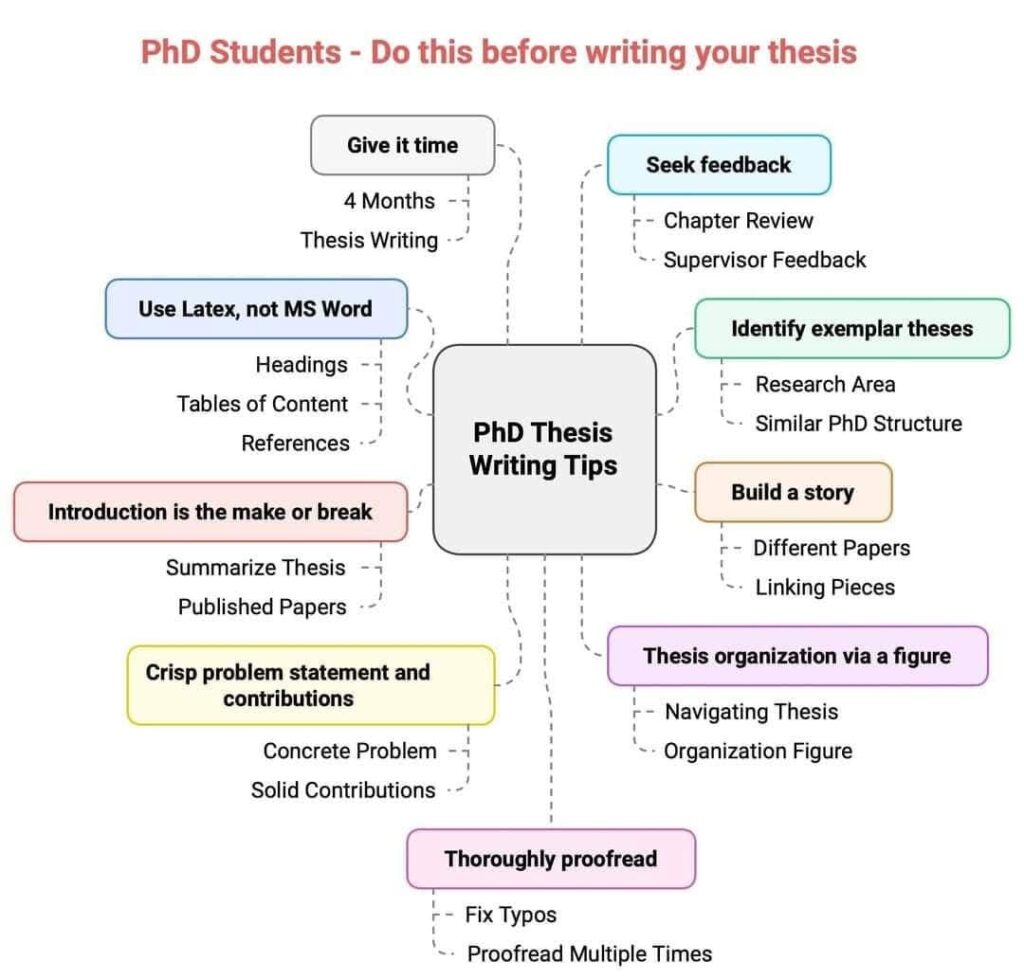
✅ 1. Give It Time
Thesis writing requires focused effort. Allocate at least four months for dedicated writing, ensuring you have enough time for drafting, revisions, and feedback. Avoid last-minute writing, as rushing often compromises clarity and structure.
✅ 2. Seek Feedback Early
Engage your supervisor and peers from the beginning. Request reviews for each chapter as you progress. Early feedback helps identify gaps, improve argumentation, and refine your research presentation before final submission.
✅ 3. Identify Exemplar Theses
Studying previously successful theses in your field provides valuable guidance. Examine their structure, methodology, writing style, and organization. This helps you model your thesis while maintaining originality.
✅ 4. Use LaTeX Instead of MS Word
For complex documents with tables, figures, references, and mathematical expressions, LaTeX offers superior organization and formatting control. It ensures consistency throughout your thesis, making revisions and updates easier.
✅ 5. Craft a Strong Introduction
The introduction is critical—it sets the tone for your entire thesis. Summarize the research problem, objectives, methodology, and highlight any published work. A clear, concise introduction immediately engages readers and demonstrates the significance of your study.
✅ 6. Build a Cohesive Story
Connect your papers, findings, and ideas into a logical narrative. Each chapter should flow seamlessly into the next, showing the progression of your research and how individual studies contribute to your overarching thesis.
✅ 7. Define a Crisp Problem Statement & Contributions
Clearly articulate the problem your research addresses. Emphasize your contributions, whether they are theoretical, methodological, or practical. A concrete problem statement with well-defined contributions strengthens your thesis’s impact.
✅ 8. Organize Your Thesis Visually
Using figures, diagrams, or flowcharts to illustrate the thesis structure can clarify the overall layout for both you and your readers. Visual guides help ensure logical progression and prevent redundant content.
✅ 9. Proofread Thoroughly
Revisions are key to clarity and precision. Proofread multiple times, fix typos, and refine language. Consider professional proofreading or peer review to ensure your thesis is polished and academically rigorous.
📌 The Bottom Line
A well-structured, meticulously prepared thesis forms the foundation of a successful defense. Following these steps helps PhD students produce high-quality work, present their research convincingly, and make a strong academic impact.
💡 Save this guide and share it with fellow PhD researchers who are gearing up to write their thesis!