The Discussion section is one of the most critical parts of a research paper. It interprets your results, places them in the context of existing knowledge, and demonstrates the significance of your study. Writing a strong discussion not only strengthens your paper but also enhances its credibility and impact. Here’s a structured approach to craft an effective Discussion section.
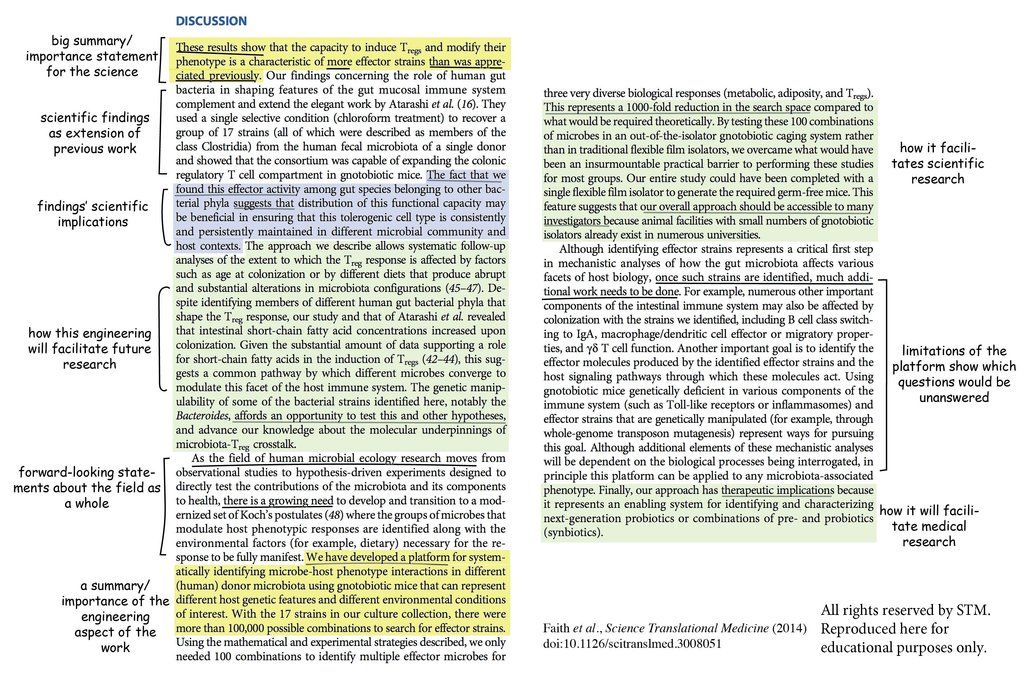
🔹 Big Summary / Importance of Findings
Begin with a clear, strong statement summarizing the key takeaway of your study. Highlight the most important results and their relevance to your research question. This sets the tone for the entire discussion and immediately informs readers of your study’s value.
🔹 Scientific Findings as an Extension of Previous Work
Connect your findings with prior research. Explain how your study builds upon or differs from existing knowledge. Demonstrating this linkage shows your awareness of the scholarly landscape and positions your work as a meaningful contribution to the field.
🔹 Findings’ Scientific Implications
Discuss the significance of your results and their broader impact. Consider how your findings advance theoretical understanding, inform policy, or influence practice within your discipline. Highlight why these results matter to the scientific community.
🔹 How This Research Facilitates Future Studies
Explain how your study lays the groundwork for further research. Identify areas where your findings open new questions, methodologies that could be refined, or emerging topics that require exploration. This shows foresight and encourages continued investigation in your area.
🔹 Forward-Looking Statements About the Field
Identify gaps in current knowledge and suggest directions for future research. Highlight trends or unresolved questions that your study has revealed. Forward-looking statements demonstrate your critical thinking and vision for the field’s advancement.
🔹 Summary / Engineering or Practical Impact
If applicable, emphasize the practical or applied significance of your research. Discuss potential technological, medical, educational, or societal applications. Showing how your study can influence real-world outcomes strengthens its value and relevance.
🔹 Limitations of the Study
Acknowledge the limitations of your research honestly. Discuss any constraints in study design, data collection, or analysis. Highlighting limitations adds transparency and provides guidance for future studies to address these gaps.
🚀 The Bottom Line
A well-structured Discussion section transforms your results into a compelling narrative that underscores the importance of your research. By summarizing key findings, connecting them to existing literature, highlighting implications, and outlining future directions, your Discussion enhances the credibility, impact, and clarity of your paper.
💡 Save this guide and share it with fellow researchers striving to improve their academic writing!