Bibliometric analysis has become an essential tool for researchers who want to understand the structure, trends, and impact of scholarly work in their field. By analyzing publications, authors, citations, and collaborations, bibliometric studies provide insights into knowledge development and future research directions. If you’re planning a bibliometric analysis paper, here’s a step-by-step guide to structure your study effectively.
🔹 Step 1: Science Mapping
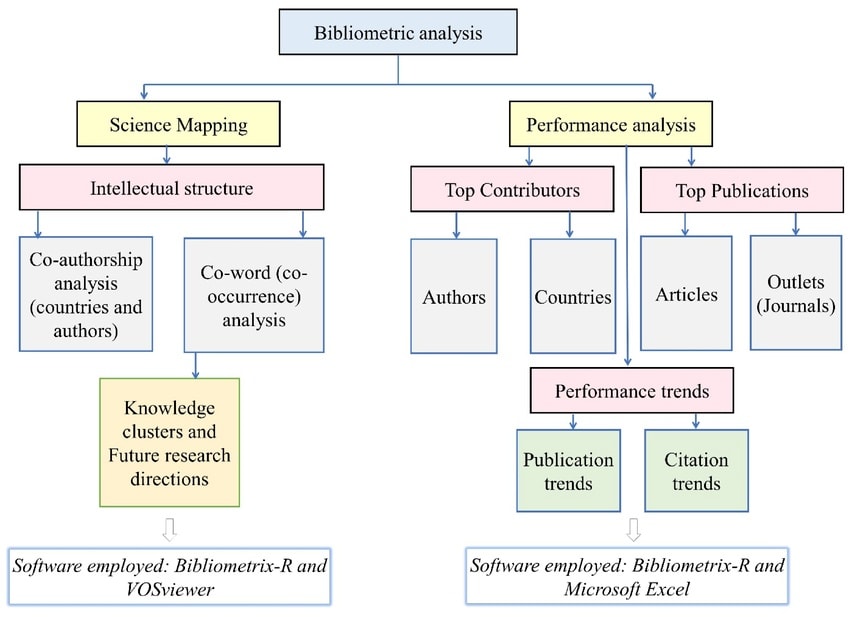
Science mapping allows you to visualize the landscape of a research field. It highlights how topics are connected, identifies influential authors, and reveals emerging areas of study. This step provides a macro-level view of how knowledge is organized and evolving over time.
🔹 Step 2: Intellectual Structure
Understanding the intellectual structure involves analyzing the relationships between authors, articles, and citations. This step helps you uncover the key contributors, foundational studies, and the theoretical frameworks shaping your research area.
🔹 Step 3: Performance Analysis
Performance analysis focuses on evaluating the productivity and impact of authors, institutions, countries, and journals. Metrics such as publication count, citation trends, and h-index provide a clear picture of performance and influence within the academic community.
🔹 Step 4: Identifying Top Contributors & Publications
Highlighting the most influential authors, institutions, and journals in your field gives context to your study. It also helps researchers recognize major trends, prominent research groups, and landmark publications that have shaped the discipline.
🔹 Step 5: Co-authorship Analysis
Co-authorship analysis examines collaboration patterns between authors and countries. Mapping these networks uncovers research partnerships, collaborative clusters, and the global flow of knowledge, providing valuable insight into how scientific communities interact.
🔹 Step 6: Co-word (Co-occurrence) Analysis
Co-word analysis identifies frequently occurring keywords and their relationships in published literature. This method reveals research hotspots, thematic clusters, and emerging topics, guiding future investigations and helping you pinpoint areas of high relevance.
🔎 Analysis Can Be Performed By:
✔️ Authors – Productivity, impact, and collaboration patterns
✔️ Countries – Contribution to the global research landscape
✔️ Articles – Most cited and influential publications
✔️ Outlets (Journals) – Leading journals in the field
🔬 Identifying Key Insights
Bibliometric analysis enables you to uncover:
📌 Knowledge clusters and potential future research directions
📌 Performance trends of authors, institutions, and journals
📌 Publication trends over time
📌 Citation patterns that indicate influence and impact
🛠️ Recommended Software Tools
✅ Bibliometrix-R – Comprehensive R package for bibliometric analysis
✅ VOSviewer – Visualizes co-authorship, co-citation, and keyword networks
✅ Microsoft Excel – Useful for organizing, cleaning, and analyzing bibliometric data
📢 Bibliometric analysis not only helps researchers explore trends and collaborations but also evaluates the impact of scientific work within a field. Whether you’re mapping a research domain for the first time or seeking insights for a systematic review, bibliometric studies offer a powerful way to understand the scholarly landscape.
💬 Are you currently working on a bibliometric analysis? Share your experiences, challenges, or tips in the comments below! 👇