
Embarking on your research journey in the field of social sciences can be both exciting and overwhelming. Whether you’re a student, early-career researcher, or independent scholar, understanding how to begin and structure your research is crucial for achieving meaningful outcomes. Below are three detailed and practical research tips to help you navigate the process with clarity and confidence.
📌 1. Choose a Focused Research Topic
Selecting the right research topic is the first and most critical step in your research journey. A well-defined topic lays the foundation for a successful study.
Here’s how to do it effectively:
- Start broad, then narrow down: Begin by identifying your general area of interest (e.g., education, gender studies, media influence, or environmental sociology). Then, refine it by focusing on a specific issue within that domain. For example, instead of “social media and youth,” focus on “the impact of Instagram use on self-esteem among university students.”
- Ensure relevance and originality: Your topic should address a current social issue or a gap in existing literature. Review recent studies and note areas where further investigation is needed.
- Consider feasibility: Choose a topic that aligns with your available time, resources, and access to data. Avoid overly ambitious projects that may be difficult to complete.
- Align with your passion: When you choose a topic that genuinely interests you, your motivation and creativity will remain high throughout the research process.
A focused topic helps you stay organized, saves time, and ensures that your research remains coherent and meaningful.
📌 2. Start with a Thorough Literature Review
A strong literature review is the backbone of any quality research. It helps you understand what has already been studied, what theories exist, and where new contributions can be made.
Steps to conduct an effective literature review:
- Search systematically: Use academic databases such as Google Scholar, ResearchGate, JSTOR, and Scopus to find relevant journal articles, books, and reports.
- Read critically: Don’t just summarize existing studies—evaluate their methods, findings, and limitations. Look for recurring patterns, disagreements, and research gaps.
- Organize your sources: Use reference management tools (like Zotero, Mendeley, or EndNote) to keep your readings organized and easily accessible.
- Synthesize information: Integrate different perspectives to build a clear narrative. Highlight where your research fits in and how it will contribute to existing knowledge.
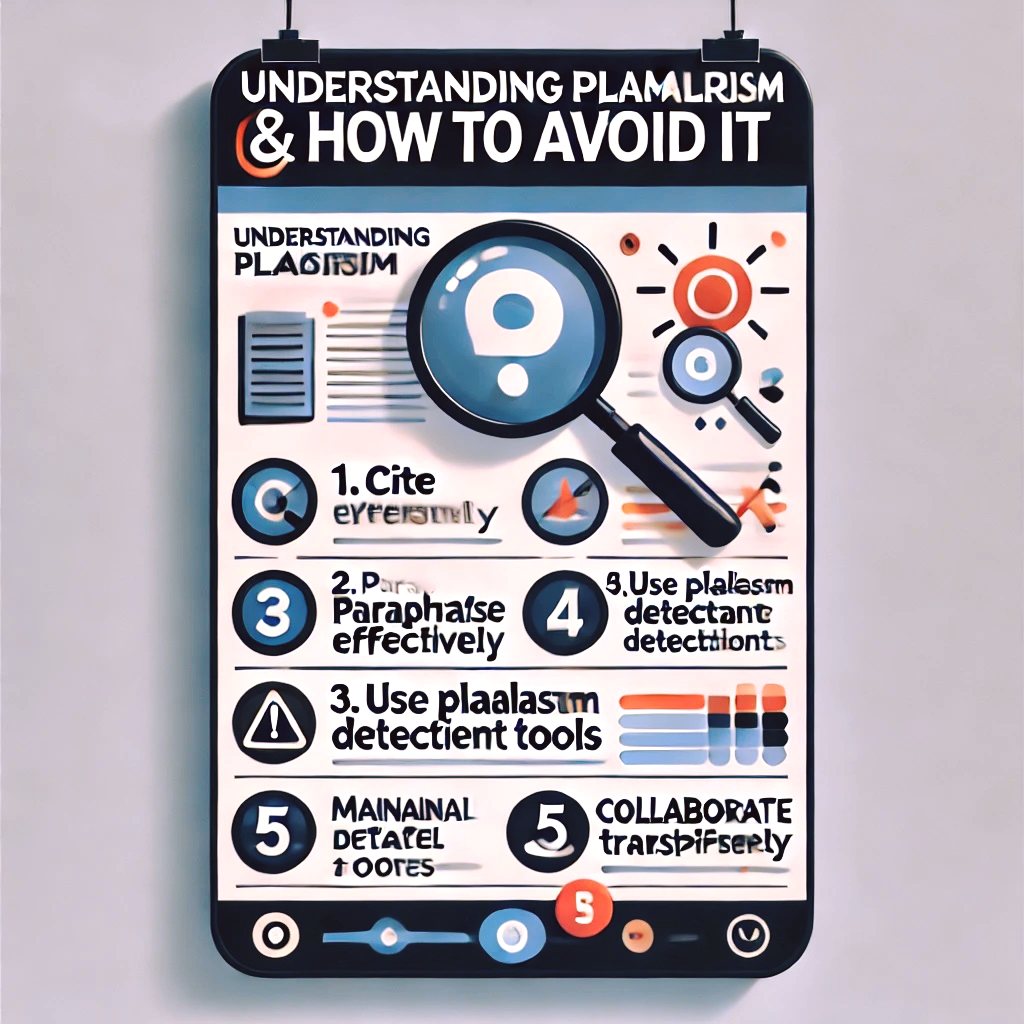
- Avoid plagiarism: Always paraphrase ideas in your own words and give proper credit through citations.
A well-written literature review demonstrates your understanding of the field, justifies your research question, and strengthens your overall academic credibility.
📌 3. Identify Your Research Methodology
Once your topic and background knowledge are clear, it’s time to decide how you’ll conduct your research — that is, your research methodology.
Types of methodologies:
- Qualitative Research: Focuses on exploring ideas, experiences, and meanings through methods like interviews, focus groups, and textual analysis. It’s ideal for understanding complex social behaviors and perspectives.
- Quantitative Research: Involves numerical data and statistical analysis to test hypotheses or measure variables. Surveys, experiments, and structured observations are common tools.
- Mixed Methods: Combines both qualitative and quantitative approaches to provide a more comprehensive understanding of the research problem.
How to choose the right method:
- Match your research question with your methodology. For instance, if you’re asking “why” or “how” something happens, qualitative methods may be suitable; if you’re testing a hypothesis or measuring impact, quantitative methods work better.
- Ensure ethical considerations—get consent from participants, ensure confidentiality, and avoid bias in data collection.
- Plan your data analysis in advance. For qualitative data, thematic analysis is common, while for quantitative data, use statistical tools like SPSS, Excel, or R.
A well-chosen methodology ensures your findings are valid, reliable, and academically sound.
💬 Need Guidance?
Starting research doesn’t have to be intimidating — expert support can make the process smoother and more productive.
At PAK Ink Publications (PIP), we help researchers at every stage:
✅ Publication Support: Publish your papers at reasonable rates in HEC-approved W, X, & Y Category Journals, also indexed in Scopus and Web of Science.
✅ Research Collaboration: Join ongoing social sciences projects—we currently have 10+ articles/topics available for joint authorship in X & Y Category journals.
✅ Professional Services: We offer proofreading, editing, plagiarism checks, research guidance, and publication assistance.
Contact Us:
📩 Email: pakinkpub@gmail.com
🌐 Facebook: @pakinkpub
📸 Instagram: @pakinkpub