One of the biggest challenges in research is not writing—it is identifying a meaningful research gap. Without a clearly defined gap, even a well-written study can lack originality, direction, and academic impact. A strong research project begins with a clear understanding of what is missing, underexplored, or misunderstood in existing literature. Simply put, if your gap is weak or unclear, your entire study loses its value.
Understanding different types of research gaps is essential for developing a focused and impactful study. Below are nine important types of research gaps that every researcher should be familiar with.
📊 Types of Research Gaps
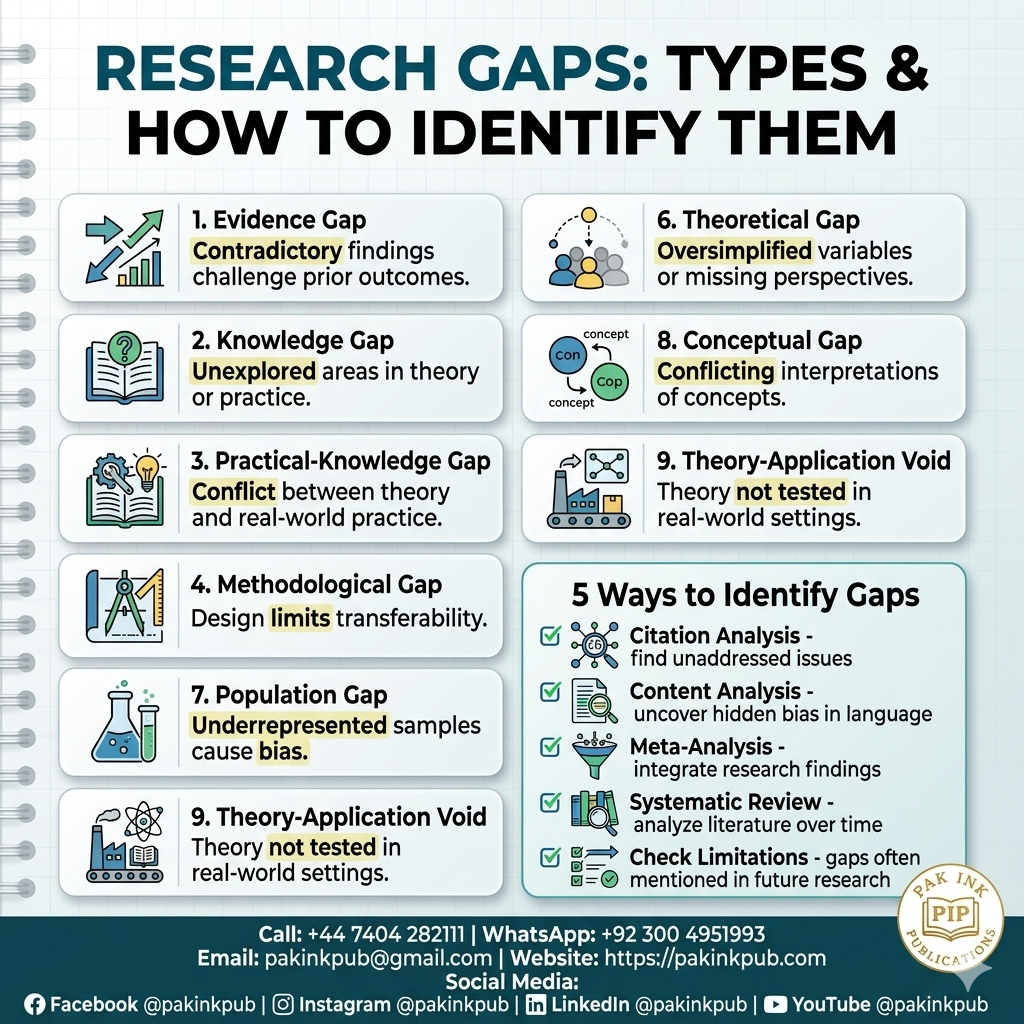
1️⃣ Evidence Gap – This occurs when findings in existing studies contradict each other, creating confusion or uncertainty that requires further investigation.
2️⃣ Knowledge Gap – These are areas that remain completely unexplored or lack sufficient academic attention.
3️⃣ Practical-Knowledge Gap – This gap arises when there is a disconnect between theoretical knowledge and real-world application.
4️⃣ Methodological Gap – Found when existing studies use limited or flawed research designs, suggesting the need for alternative approaches.
5️⃣ Empirical Gap – Occurs when there is insufficient data or evidence to support or validate a theory.
6️⃣ Theoretical Gap – Exists when current theories are incomplete, oversimplified, or fail to explain certain phenomena.
7️⃣ Population Gap – Identified when specific groups, regions, or demographics are underrepresented in research, leading to biased findings.
8️⃣ Conceptual Gap – Arises when there are inconsistencies or disagreements in how key concepts are defined or understood.
9️⃣ Theory-Application Void – Occurs when theoretical frameworks have not been tested or applied in real-world contexts.
Recognizing these gaps allows researchers to position their work effectively and contribute something meaningful to their field.
🔍 How to Identify Research Gaps
Identifying research gaps requires a strategic and analytical approach rather than simply reading articles. Below are five proven methods to help you uncover gaps in the literature.
✔ Citation Analysis – Reviewing references and citations helps you track influential studies and identify areas that require further exploration or remain unanswered.
✔ Content Analysis – Carefully examining the language and arguments used in studies can reveal hidden biases, assumptions, or overlooked perspectives.
✔ Meta-Analysis – Combining results from multiple studies allows you to identify inconsistencies, patterns, and areas lacking consensus.
✔ Systematic Review – Analyzing a large body of literature over time helps you identify trends, limitations, and emerging gaps in research.
✔ Reviewing Limitations Sections – Many researchers explicitly mention gaps in their studies within the limitations or recommendations for future research sections.
📈 Why Research Gaps Matter
A strong research paper does not simply present data or findings—it addresses a gap that is relevant, significant, and meaningful. Identifying the right gap ensures that your research contributes new knowledge, solves real problems, and adds value to your academic field. It also increases your chances of publication, as journals prioritize originality and contribution.
📢 Need Research Assistance?
Identifying research gaps and developing a strong study can be challenging, especially for students and early-career researchers. Professional support can help you refine your ideas and ensure your research meets high academic standards.
PAK Ink Publications provides complete research support—from identifying research gaps and developing proposals to data analysis and final publication. Our expert team is dedicated to helping you succeed in your academic journey.
📞 Contact Us
Call: +44 7404 282111
WhatsApp: +92 300 4951993
Email: pakinkpub@gmail.com
🌐 Connect With Us
Website: https://pakinkpub.com
Facebook | Instagram | LinkedIn | YouTube: @pakinkpub
🔑 Final Thoughts
Finding a research gap is not just the first step in research—it is the foundation of your entire study. By understanding different types of gaps and applying effective identification strategies, you can develop research that is original, impactful, and academically valuable. Focus on gaps that truly matter, and your work will stand out in the world of research.