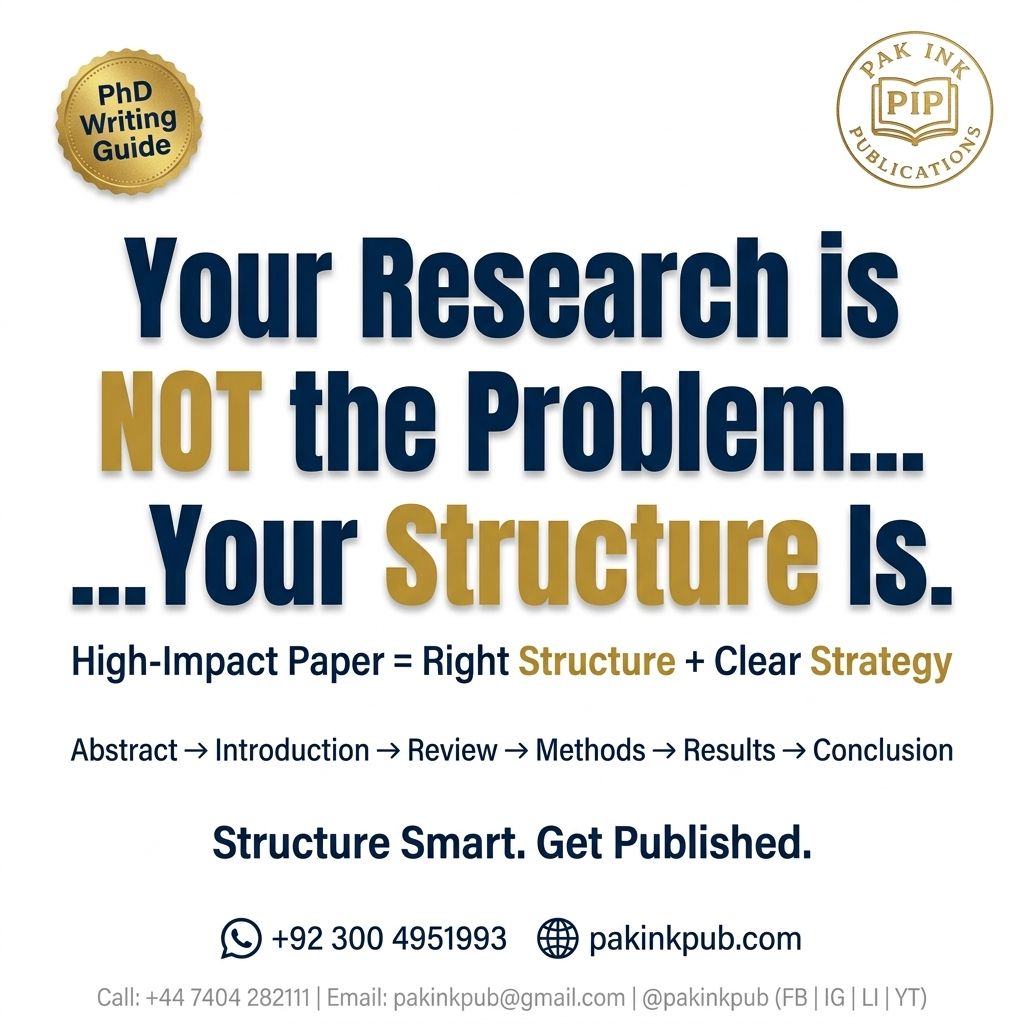
Writing a high-impact research paper is not just about having strong data or innovative ideas. Many PhD students and researchers struggle with publication not because their research is weak, but because their paper lacks proper structure. If you are aiming for publication in Scopus or Web of Science indexed journals, understanding the correct research paper structure is essential.
A well-structured research paper improves readability, strengthens your argument, and significantly increases your chances of acceptance. In this guide, you will learn how to structure a research paper step by step using a proven, high-impact format.
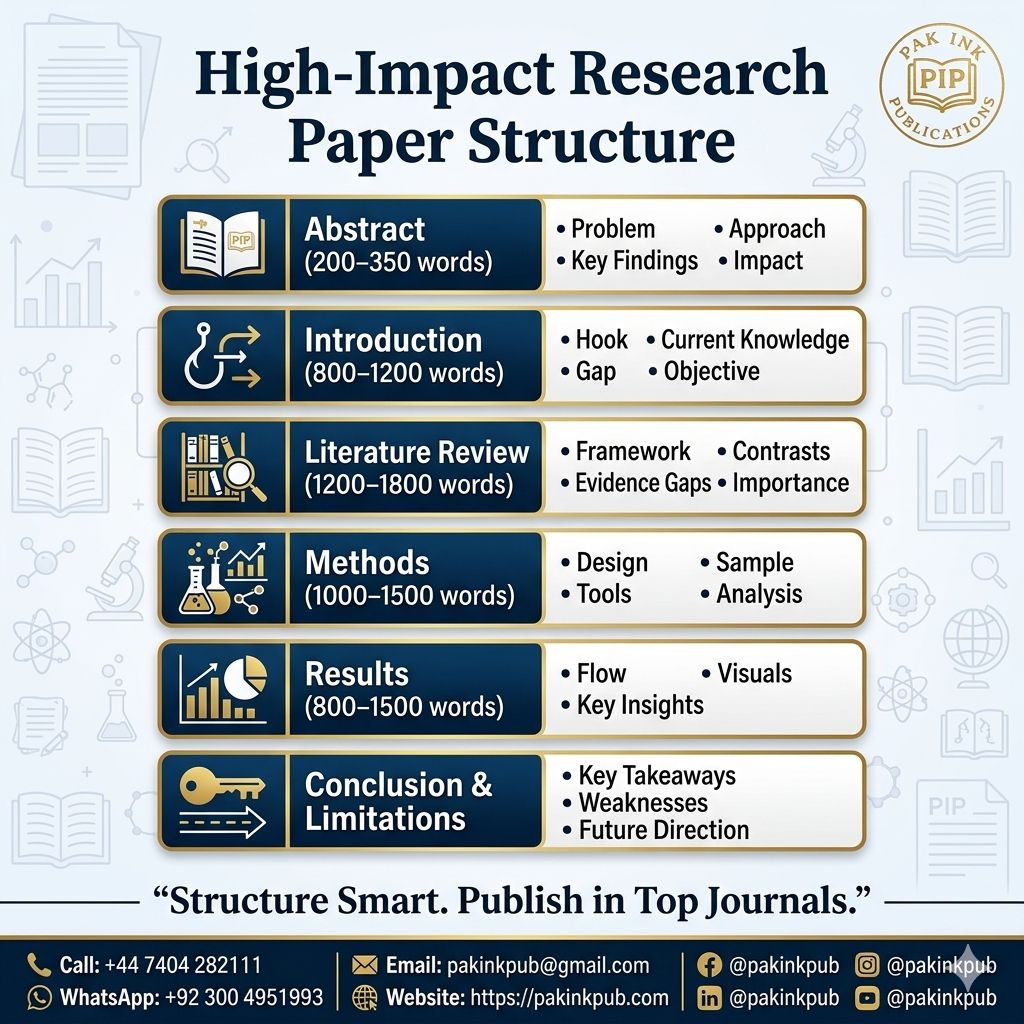
Abstract (200–350 Words)
The abstract is the first thing journal editors and reviewers read, so it must clearly summarize your study. Start by identifying the core problem your research addresses and explain why it is important. Then briefly describe your research approach or methodology. Highlight your key findings with clarity and conclude with a strong impact statement that explains the significance of your results. Using the right structure in your abstract improves visibility and helps your paper rank better in academic databases.
Introduction (800–1200 Words)
The introduction sets the foundation of your research paper. Begin with a strong hook such as a fact, statistic, or problem statement to capture attention. Then explain the current knowledge in your field by summarizing recent studies. Clearly identify the research gap, explaining what is missing and why it is important to address it. Finally, present your research objective and hypothesis. A strong introduction aligned with academic writing standards is crucial for Scopus and Web of Science publications.
Literature Review / Integration (1200–1800 Words)
The literature review demonstrates your understanding of existing research. Start by presenting the theoretical framework or models guiding your study. Then compare and contrast previous studies, showing how your work aligns with or challenges them. Identify evidence gaps that other researchers have overlooked and explain why filling these gaps is important. A well-written literature review strengthens your research methodology and improves your chances of publication acceptance.
Methods (1000–1500 Words)
The methods section explains how your research was conducted. Clearly justify your research design and explain why it is suitable for your study. Describe your population or sample, including inclusion and exclusion criteria. Provide details about the tools, instruments, or techniques used. Finally, explain your data analysis plan, including statistical tests or software. A clear and transparent methods section builds trust and credibility with journal reviewers.
Results (800–1500 Words)
The results section presents your findings in a logical and structured way. Start with descriptive results and gradually move towards more analytical insights. Use tables, graphs, and figures to support your findings and make them easier to understand. Focus on key insights and explain what your data actually shows. Well-presented results improve the overall impact of your research paper and make it more appealing for high-impact journals.
Conclusion and Limitations
This is one of the most overlooked sections in research writing, yet it plays a critical role in acceptance. Clearly summarize your main findings and provide a strong conclusion that reflects the significance of your work. Be honest about the limitations of your study, as this shows academic integrity. You can also suggest future research directions to add more value. A strong conclusion leaves a lasting impression on reviewers and increases publication success.
Why Research Papers Get Rejected
Many high-quality research papers are rejected due to poor structure rather than weak content. Common issues include unclear arguments, poorly developed sections, and lack of logical flow. Academic journals, especially Scopus and Web of Science indexed ones, require not only strong research but also clear and professional presentation. Structuring your paper correctly can make the difference between rejection and acceptance.
Final Thoughts
A high-impact research paper is not just written, it is strategically structured. Each section plays a specific role in communicating your research effectively. By following this step-by-step structure, you can improve your academic writing, enhance clarity, and increase your chances of getting published in reputable journals.
At PAK Ink Publications, we support researchers in structuring, writing, and publishing their research papers according to international standards. If you are serious about publishing your research and want expert guidance, feel free to reach out on WhatsApp at +92 300 4951993.