If you are involved in academic publishing, you have likely encountered terms like Q1, Q2, Q3, and Q4 journal rankings. However, many researchers, especially PhD students and early-career academics, do not fully understand what these journal quartiles mean or how they impact research visibility and career growth. Understanding journal quartiles is essential for making smart publication decisions and improving your chances of success in Scopus-indexed journals.
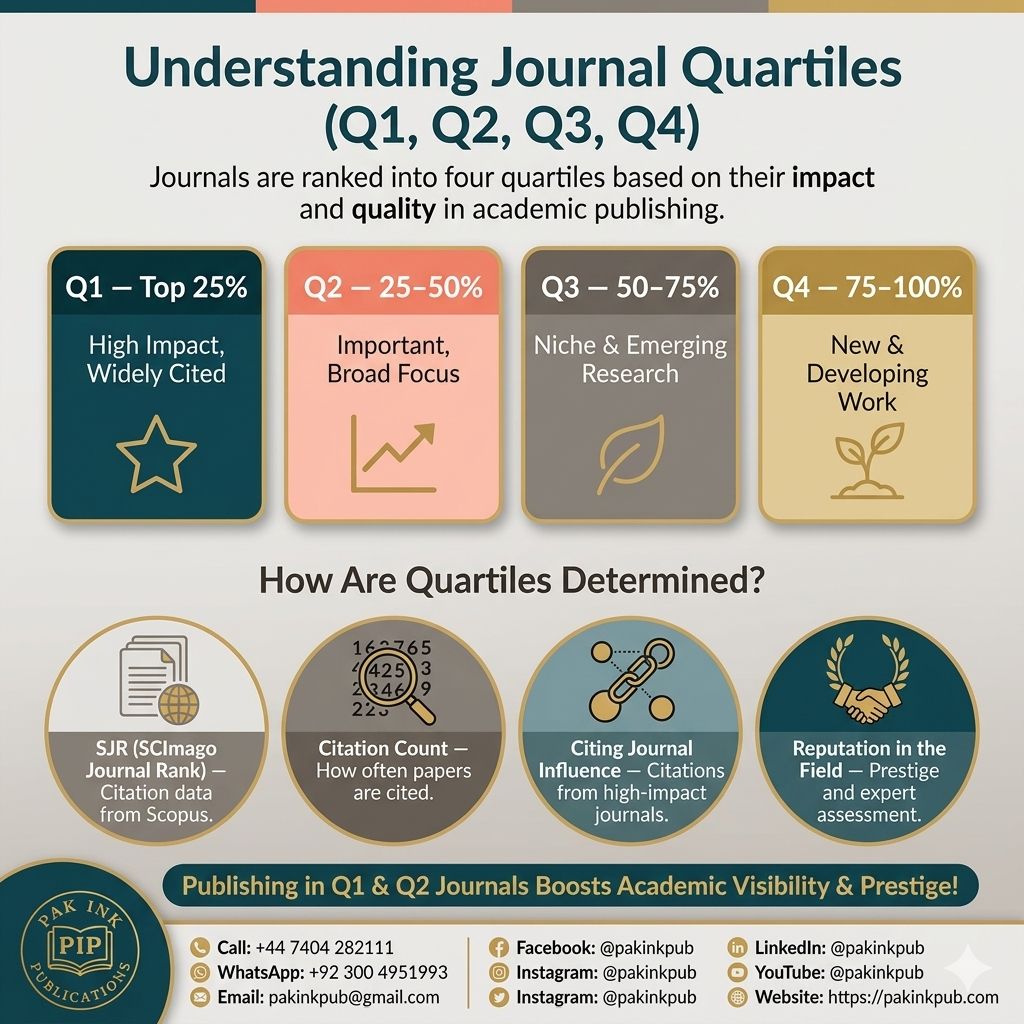
Journal quartiles are a way of ranking academic journals based on their impact and influence within a specific field. These rankings are commonly derived from metrics such as the SCImago Journal Rank (SJR), citation data, and overall journal reputation. Quartiles divide journals into four categories, helping researchers identify the quality and influence of a journal before submitting their work.
Q1 journals represent the top 25 percent of journals in a specific field. These are high-impact journals that are widely cited and highly respected in the academic community. Publishing in Q1 journals significantly increases your research visibility, strengthens your academic profile, and enhances your chances of career advancement. Researchers targeting high-impact publications often prioritize Q1 journals due to their strong reputation and global recognition.
Q2 journals fall within the 25 to 50 percent range and are also considered reputable and influential. These journals offer strong visibility and maintain solid academic standards. Publishing in Q2 journals is a great option for researchers who want to balance quality and acceptance probability. For many PhD scholars, Q2 journals provide an excellent opportunity to build credibility while working toward higher-impact publications.
Q3 journals, ranked between 50 to 75 percent, are typically more niche and focused on emerging or specialized research areas. These journals can be valuable for researchers working in specific domains or developing new areas of study. While they may have lower citation impact compared to Q1 and Q2 journals, they still play an important role in academic publishing.
Q4 journals represent the bottom 25 percent and are often newer or less established. These journals can serve as a starting point for early-career researchers who are entering the world of academic publishing. Although Q4 journals may have lower impact, they provide opportunities to gain initial publication experience and improve research writing skills.
Journal quartiles are determined using several important factors. The SCImago Journal Rank (SJR) is one of the most widely used indicators, based on citation data from Scopus. Citation count measures how often articles in a journal are referenced by other researchers, indicating its influence. The quality of citing journals also matters, as citations from high-impact journals carry more weight. Additionally, a journal’s reputation in its field, including expert opinions and academic prestige, contributes to its quartile ranking.
Understanding these metrics helps researchers choose the right journal for their work. Selecting a journal without considering its quartile ranking can lead to poor visibility, lower impact, and even rejection if the research does not match the journal’s scope and standards. Strategic journal selection is a key part of successful academic publishing.
Publishing in Q1 and Q2 journals offers significant advantages. It improves your research visibility, increases citation potential, and enhances your academic credibility. These publications are often required for PhD completion, academic promotions, and research funding opportunities. For researchers aiming to build a strong academic career, focusing on Q1 and Q2 journals is a smart and strategic approach.
In today’s competitive research environment, understanding journal rankings is not optional but essential. Whether you are a PhD student, an experienced researcher, or an academic professional, knowing how journal quartiles work allows you to plan your publication strategy more effectively and achieve better outcomes.
If you are looking for expert support in journal selection, research publication, or improving your research visibility, PAK Ink Publications provides professional guidance tailored to international standards. With the right strategy and support, you can target the right journals and maximize the impact of your research work.