Finding the right journal for your research paper is one of the most critical steps in the academic publishing process. In fact, selecting the right journal can account for nearly 50 percent of your publication success. Many researchers, including PhD students and early-career academics, spend weeks searching for suitable journals or end up submitting to the wrong one, leading to desk rejection and wasted time. Using the right journal finder tools can help you match your manuscript with the most appropriate journal quickly and increase your chances of acceptance.
Journal selection is not just about choosing a well-known name. It involves aligning your research topic with the journal’s scope, understanding impact metrics, and evaluating factors such as review speed and open access options. With advancements in digital tools, researchers now have access to powerful journal finder platforms that simplify this process and make academic publishing more efficient.
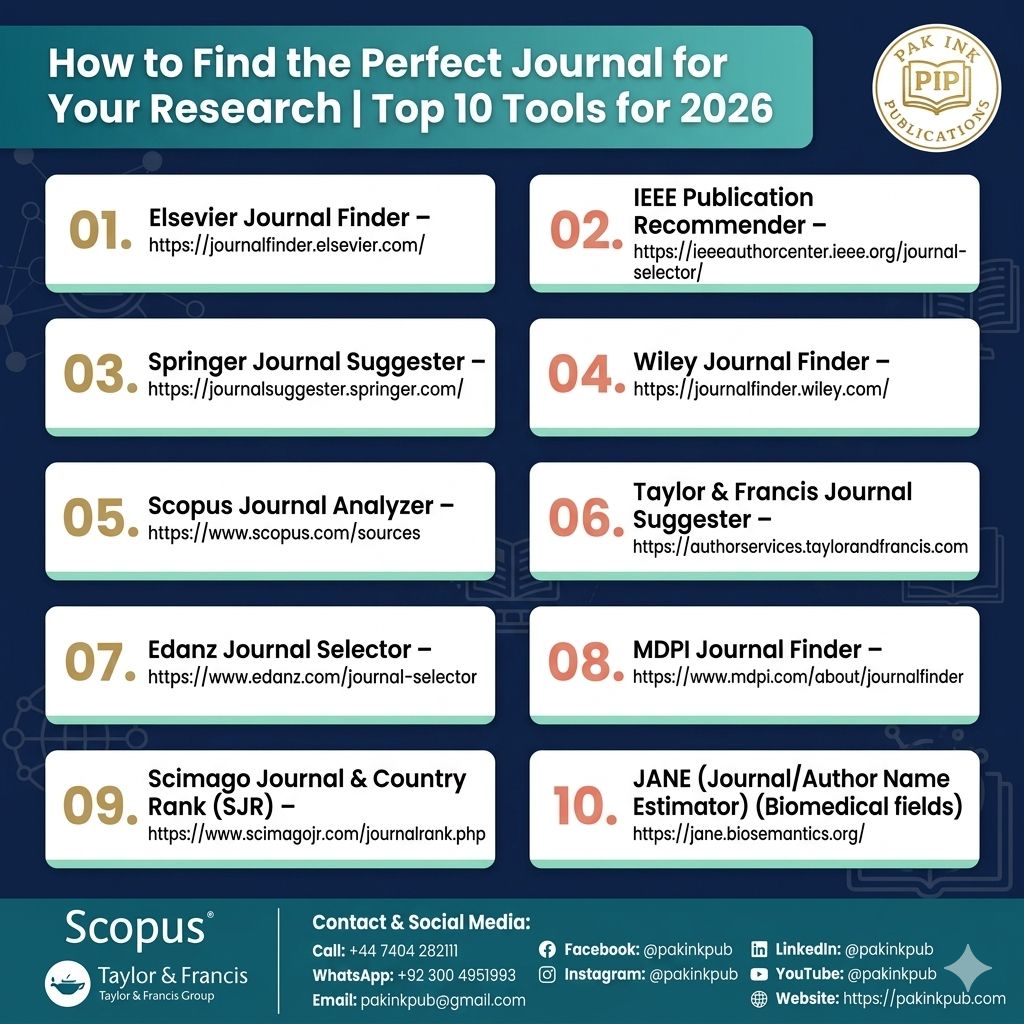
One of the most widely used tools is Elsevier Journal Finder, which helps researchers identify suitable journals based on their manuscript title, abstract, and keywords. It uses Scopus data to recommend journals with a high probability of acceptance. Similarly, the IEEE Publication Recommender is an excellent tool for researchers in engineering and technology fields, providing targeted journal suggestions based on content relevance.
Springer Journal Suggester is another popular platform that matches your manuscript with Springer journals, helping you find the best fit based on your research area. Wiley Journal Finder also offers reliable recommendations and is especially useful for interdisciplinary research topics. These tools are widely trusted in the academic community and are frequently used by researchers aiming for high-impact publications.
Scopus Journal Analyzer is an essential resource for evaluating journal quality. It allows you to explore indexed journals, compare metrics, and analyze citation trends. This tool is particularly valuable for researchers targeting Scopus-indexed journals and aiming to improve their research visibility. Similarly, Taylor and Francis Journal Suggester helps authors find appropriate journals within its extensive publishing network.
Edanz Journal Selector provides smart recommendations based on your manuscript details and is known for its user-friendly interface. MDPI Journal Finder is another fast and efficient tool that suggests open-access journals suitable for your research. For those looking to evaluate journal rankings and impact, the SCImago Journal and Country Rank (SJR) platform is highly valuable, offering insights into journal quartiles, citation data, and academic influence.
For researchers in biomedical and life sciences fields, JANE (Journal/Author Name Estimator) is a specialized tool that uses PubMed data to suggest relevant journals. It is particularly useful for identifying niche journals and improving the chances of acceptance in highly specific research areas.
While these journal finder tools are powerful, researchers should not rely solely on automated suggestions. It is important to manually evaluate each recommended journal by checking scope alignment, impact metrics, review timelines, and publication policies. A well-matched journal increases the likelihood of acceptance and ensures that your research reaches the right audience.
Using the right journal selection strategy can save months of effort and reduce the frustration of repeated rejections. Whether you are a PhD student, an early-career researcher, or an experienced academic, leveraging these tools can significantly improve your academic publishing success. Strategic journal selection is a key component of research planning and plays a major role in building a strong academic profile.
At PAK Ink Publications, we support researchers at every stage of the publication process, from manuscript preparation to journal selection and submission. With expert guidance and the right tools, you can identify the best journals for your research and increase your chances of successful publication.